 |
| Picture courtesy of Zac Wolfe |
Tuesday, August 14, 2012
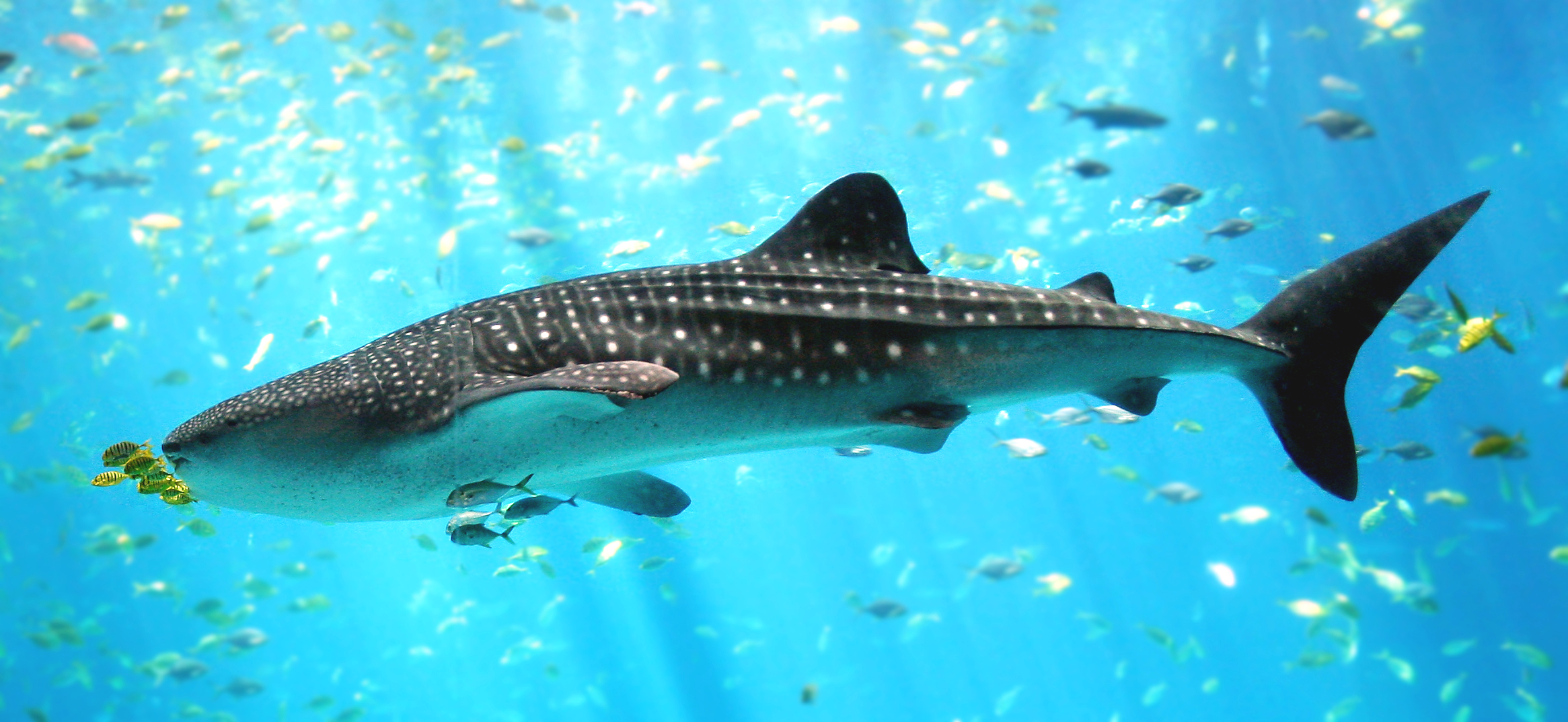
Whale Shark

Tuesday, August 7, 2012
Chinook Salmon
 |
| Photo courtesy of Zureks |
Thursday, August 2, 2012
Indo-Pacific Sailfish
 |
| Photo courtesy of Avi Klapfer/ Rotman/ naturepl.com |
Tuesday, July 24, 2012
Goliath Grouper
 |
| Photo courtesy of AESBrittany |
In honor of the quickly approaching month of August, today's creature of the week will also be August's Keystone Species: The Goliath Grouper.
Tuesday, July 17, 2012
French Angelfish
 |
| Photo courtesy of AES Brittany |
It's time for the Creature of the Week! This week, our spotlight creature is the French Angelfish. The French Angelfish is an omnivorous tropical marine fish that inhabits areas of shallow reefs. The main staples of thei...r diet are sea sponges. The French angelfish has two color morphs: adult and juvenile. The adult coloration is black with yellow on the edges of the scales on the body, around the eyes, a horizontal bar on both pectoral fins, and on the trailing filiment of the dorsal fin. The juveniles are black with verticle yellow bars down the sides of the body. The juveniles actually act as cleaner fish, hanging around cleaning stations until a fish comes to have itself cleaned. French angelfish are monogamous, meaning they pair up and stay together for breeding. In fact, if you see one French angelfish, you would be hard-pressed not to see another one with it. You know what they say, the pair that swims together stays together.
Read more about this reef fish below!
Tuesday, July 10, 2012
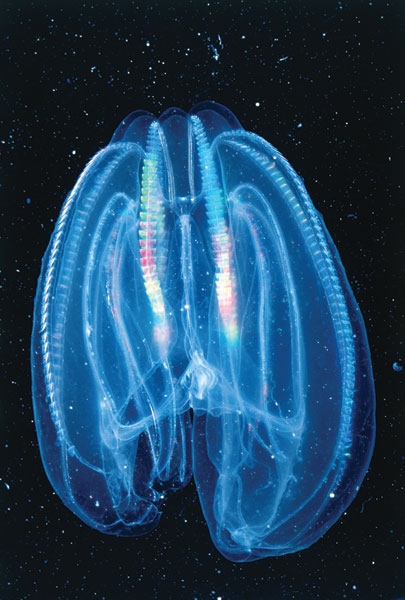
Warty Comb Jelly
 |
| Photo copyrighted by Aquarium of the Pacific |
Hello Explorers! It's time for the Creature of the Week! Did everyone enjoy the lightshows on July 4th? Well, there are plenty of lightshows in the ocean that you can see year-round! One creature that has a way with light is the Sea Wal...nut, also known as the Warty Comb Jelly. Now, comb jellies, or Ctenophores, are not true jellies, and in fact their relationship to other phyla has been highly debated. Comb jellies are known as such because members of the group use rows of cilia (hair-like extensions) that extend down their bodies in eight lines for locomotion. The Warty Comb Jelly is one of the many species of ctenophores that create lightshows in one of two ways: they can bioluminesce blue-green down their cilia when disturbed, and during the day their cilia rows refract light into rainbow like patterns. Warty Comb Jellies are native to the North and South American Atlantic coasts. Unfortunately, these voracious predators have invaded European coasts, and have become a problem on the fish and invertebrate populations. See, the comb jelly feeds on fish and invertebrate larvae, with an individdual being capable of eating up to 10 times its weight per day.
To read more on the Warty Comb Jelly, follow the link below:
And to see a real light show, watch below!
Tuesday, June 26, 2012
Loggerhead Sea Turtle
 |
| Photo courtesy of Brian Gratwicke |
_2.jpg/800px-Loggerhead_Sea_Turtle_(Caretta_caretta)_2.jpg)
Apologies for the long hiatus, but it is time again for the Creature of the Week! In honor of our PCB trip, our creature this week is the Loggerhead Sea Turtle! The Loggerhead Sea Turtle lives its entire life in the ocean..., distributed across the world from the Pacific Ocean to the Atlantic, as well as the Indian Ocean and the Mediterranean Sea. Only the females ever come to shore and that is only to lay their eggs: about four clutches every two to three years. Loggerheads can live up to 67 years, and averages around 35 inches in length (though there have been records of individuals that measured 110 inches!). These turtles are generally have a reddish-brown shell and yellowish-brown skin. Loggerheads are omnivores, meaning they eat a variety of plant and animal life, though they generally prefer invertebrates. Sadly, these reptiles are listed as endangered due to such things as overhunting, getting tangled in fishing line, consuming trash, and having their eggs harvested.
Read more about these fascinating marine reptiles below:
Subscribe to:
Posts (Atom)